
Last updated October 16, 2026
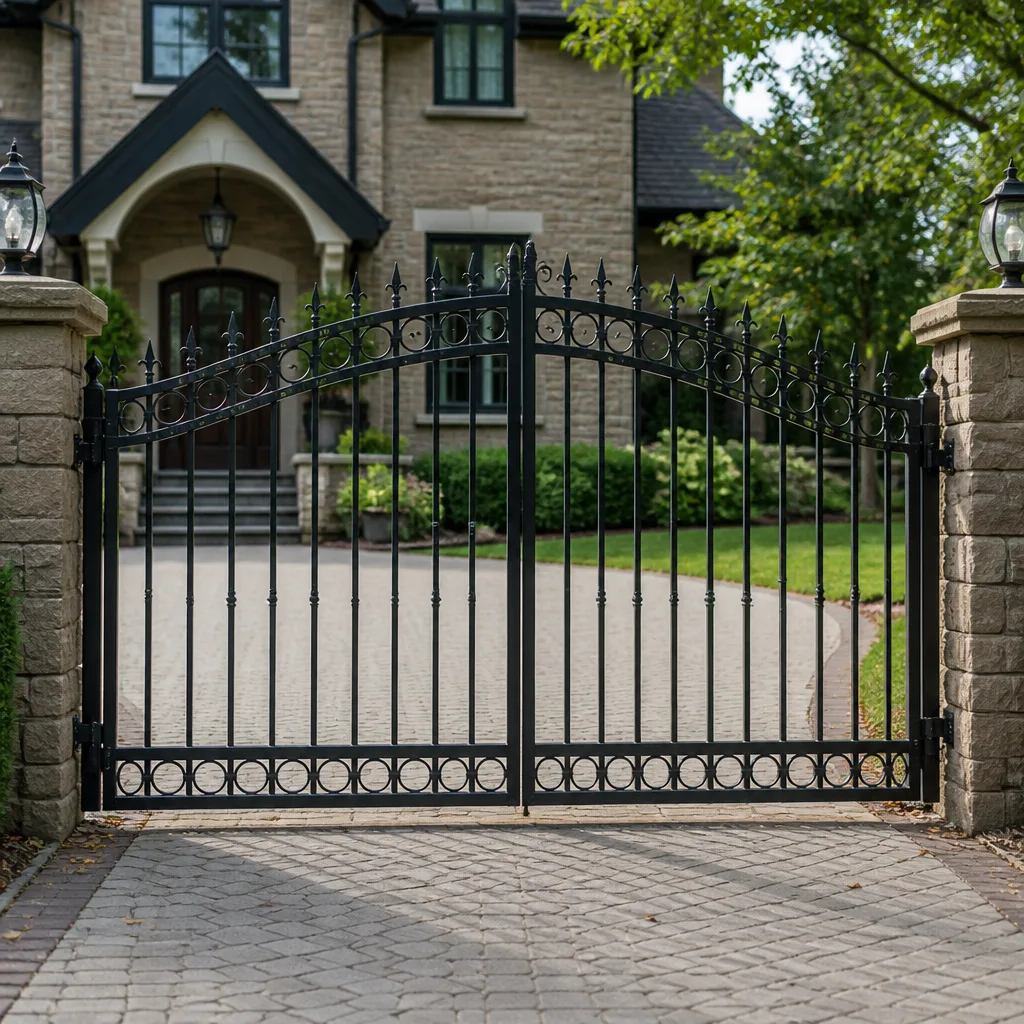 Wrought iron
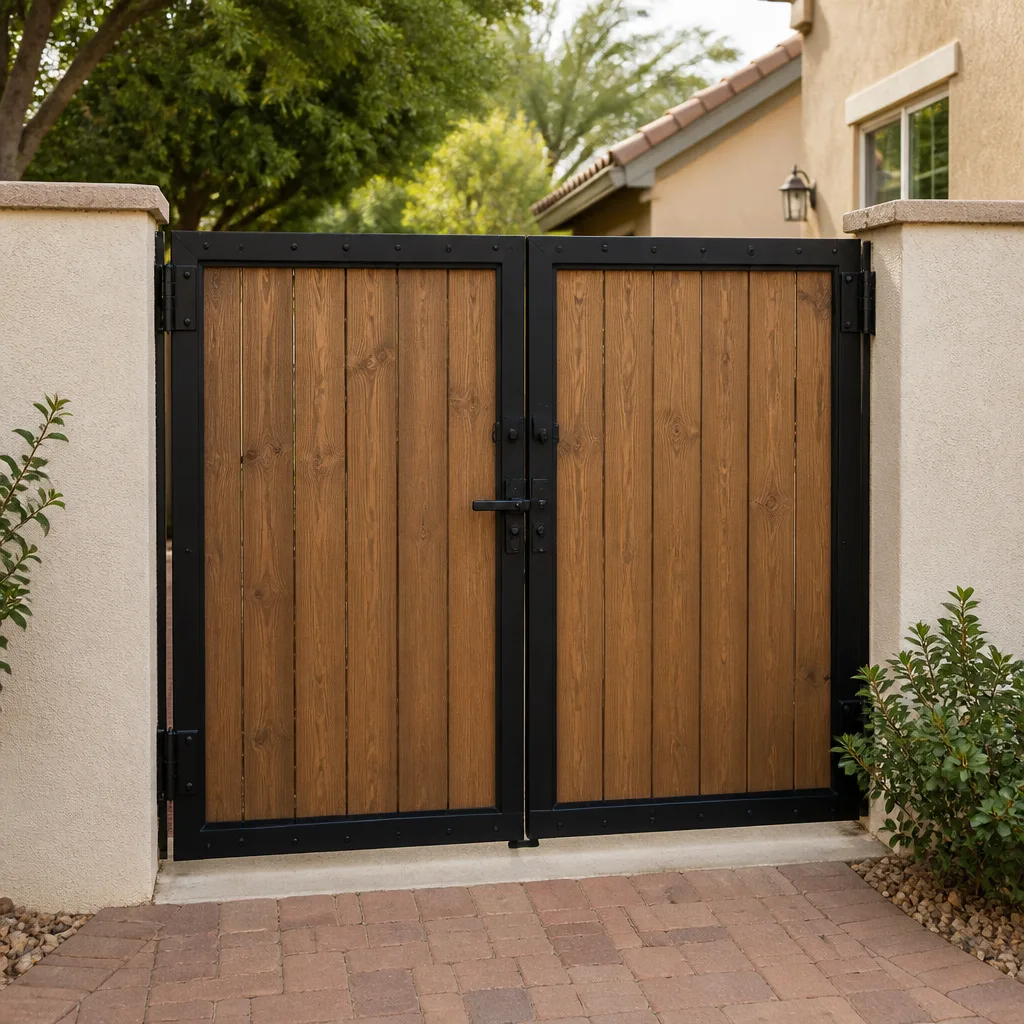 Wood & steel frame
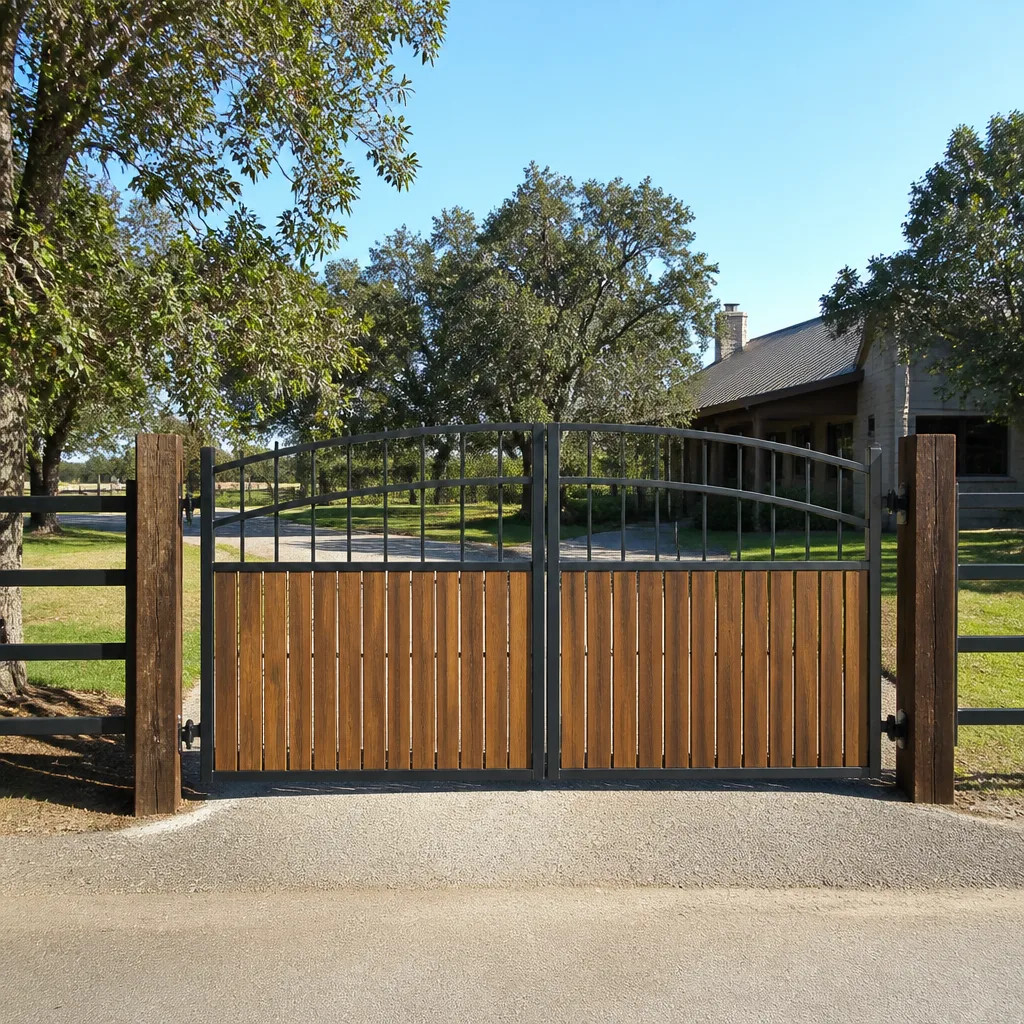 Farm & ranch
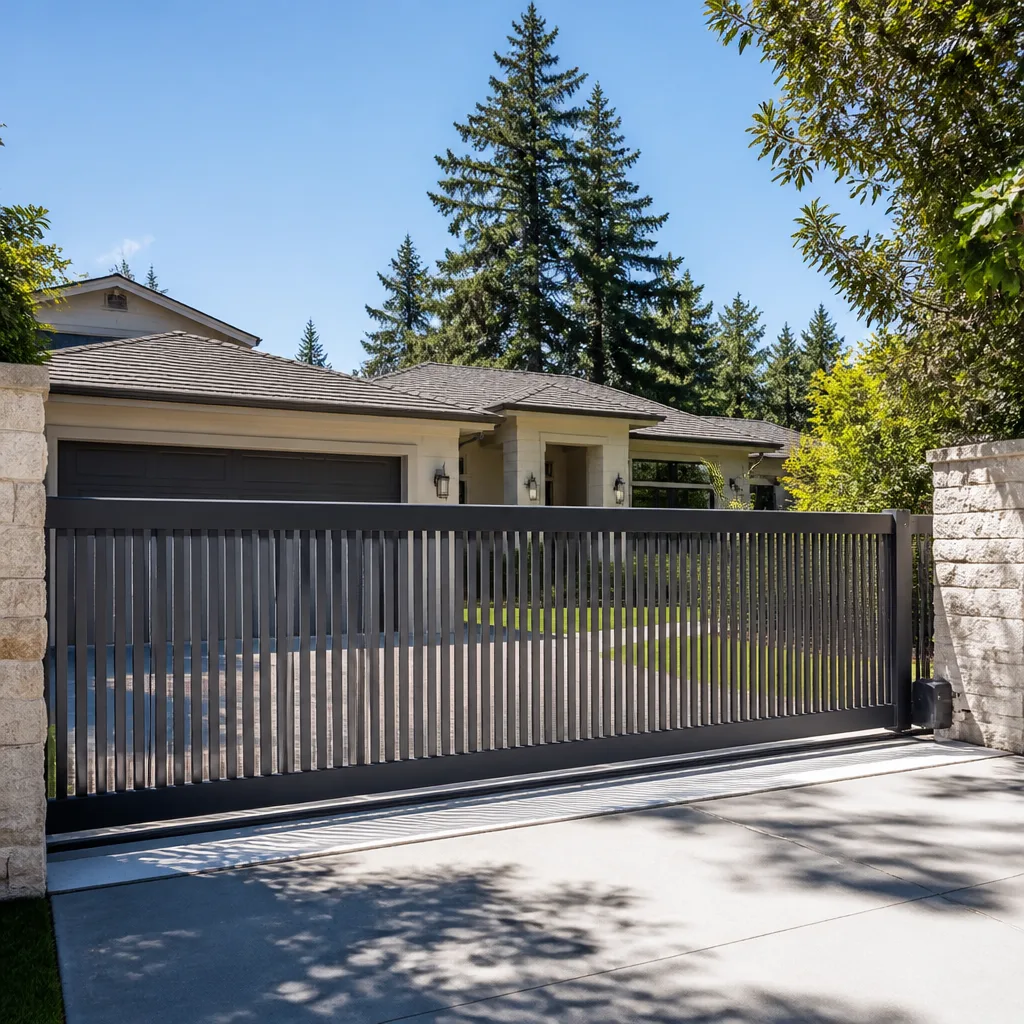 Sliding driveway gates
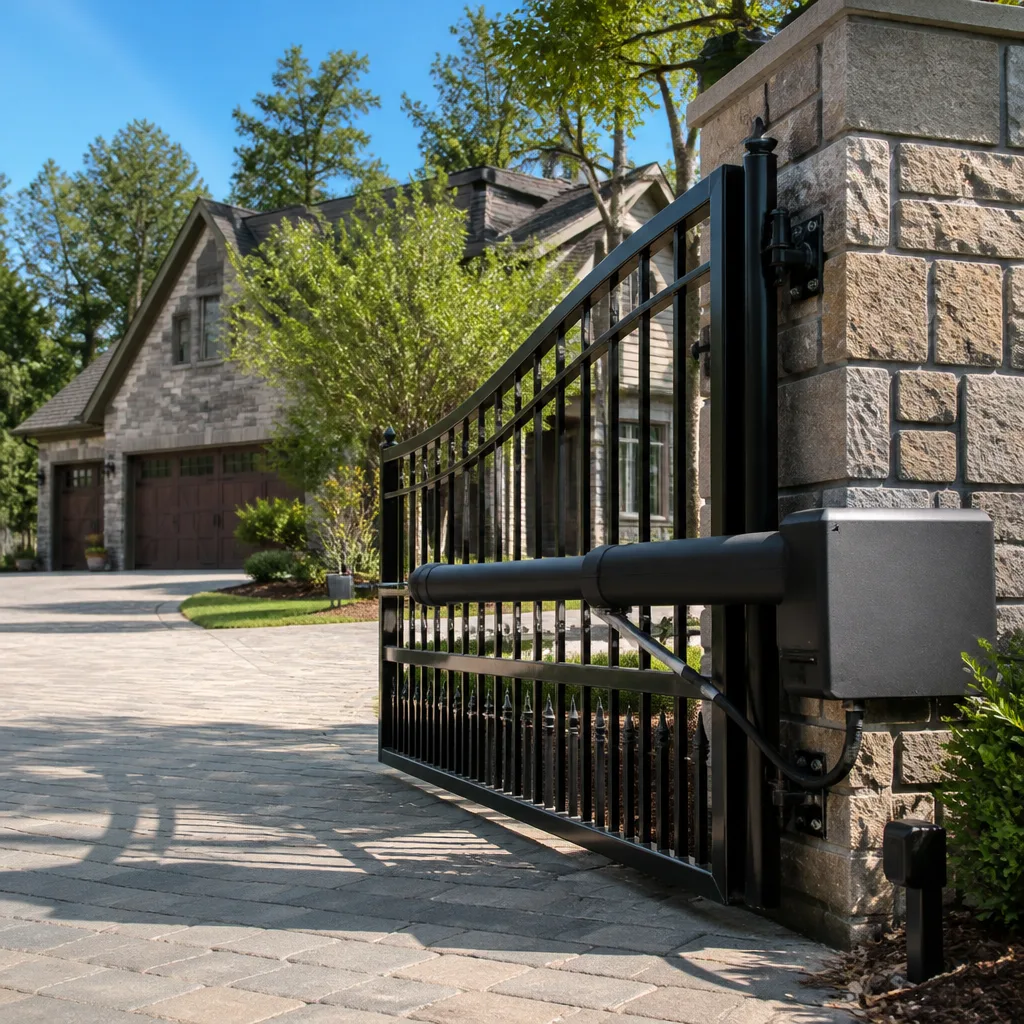 LiftMaster operators
Free on-site gate assessment - hinges, posts, and your LiftMaster or Nice gate operator checked before anything is quoted
The assessment is free and the quote is the invoice.
Get your free estimateThe Complete Guide to Gate Repair in San Jose
Most gate repair calls in San Jose could have been avoided entirely. Not with better maintenance or a more expensive opener, but with a correct diagnosis the first time. Gates fail across three distinct systems: mechanical, electrical, and structural. Homeowners who understand which system actually failed get a repair that holds for years. Homeowners who don’t end up calling a second tech six months later to fix the same symptom, which was never the real problem. This guide covers how to tell the difference before you spend a dollar, which brands fail in predictable ways across San Jose’s neighborhoods, and what a legitimate estimate includes. For Gate Repair Cost Breakdown: The San Jose Homeowner’s Reference for 2026, see our dedicated pricing guide. By the end, you’ll know more about your gate than most people who install them.
Quick Answer
Gate repair in San Jose typically involves one of three failure systems: mechanical (hinges, wheels, chains, physical obstruction), electrical (opener motor, control board, sensors, power supply), or structural (posts shifting in soil, sagging frames, cracked welds). Most gate opener repairs run $180 to $450 before parts, while full opener replacement ranges from $850 to $2,600 depending on brand and gate type. Calder Gate Repair San Jose offers Gate Repair services with free estimates at (669) 666-6859 and a written price before any work starts.
Styles & brands we work with
Table of Contents
- The Three Failure Systems: Mechanical, Electrical, Structural
- How to Diagnose Which System Is Failing
- Brand-Specific Quirks: What Breaks First on Viking, Ghost Controls, DoorKing, and Elite
- The Difference Between a 6-Month Repair and a 6-Year Repair
- How San Jose Microclimates Accelerate Different Failure Types
- What a Legitimate Gate Repair Estimate Must Include
- What You Can Safely Check Yourself vs. What Needs a Professional
- Gate Repair Cost Breakdown in San Jose
The Three Failure Systems: Mechanical, Electrical, Structural
Every gate on every property in San Jose operates on three systems working together. When one fails, the other two often show symptoms that get misread as the root cause. Here’s what each system actually does.
Mechanical is everything that physically moves: hinges, rollers, wheels, the chain on a sliding gate, the track it rides on, the physical stop the gate hits when it closes. Mechanical failure shows up as grinding, wobbling, sagging, or a gate that stops halfway. In our experience across San Jose, mechanical wear is the most common root cause on gates older than seven years, especially on swing gates where the hinge bearings have never been lubricated.
Electrical is the opener motor, the control board, the limit switches (the small sensors that tell the gate when to stop moving), the safety sensors, and the power supply from the house. Electrical failure shows up as a gate that hums but doesn’t move, opens but won’t close, trips a breaker, or works intermittently. Intermittent electrical problems are the hardest to diagnose because the gate behaves fine when the tech arrives.
Structural is the gate frame itself, the posts it hangs from, the concrete footings, and any welds. Structural failure is the slowest to develop and the most expensive to fix when ignored. A post that has shifted a quarter inch in wet soil changes the gate’s travel geometry, which then wears out hinges and wheels faster, which then strains the opener motor. What looks like an opener repair is often a post problem underneath.
The reason most repairs get repeated within a year is simple: the symptom lives in one system, but the cause lives in another. A gate that won’t close all the way might be a limit switch (electrical), a bent track (mechanical), or a shifted post (structural). Three different repairs, three very different price points, one identical symptom.
How to Diagnose Which System Is Failing
You don’t need to be a technician to narrow down the problem before you call. These five checks take ten minutes and will save you from paying for a misdiagnosis. The gate repair call you make today should be for the cause, not the symptom.
- Put the gate in manual release and move it by hand. Every opener has a manual release lever or key, usually on the side of the motor unit. Disengage it and push the gate along its full travel path. If it moves smoothly and easily, the problem is electrical, not mechanical. If it drags, catches, or takes real effort, the mechanical or structural system is the culprit, and no opener repair will fix it.
- Listen for where the sound comes from. A grinding or scraping noise while the gate moves points to mechanical: rollers, hinges, or track. A clicking or buzzing from the motor housing without movement points to the capacitor or control board inside the opener. A gate that’s silent when you press the remote points to power or receiver issues.
- Check the gate’s resting position visually. Stand at the end of the gate and look down its length. Does it angle down toward the free end? That’s a sagging hinge or a worn wheel, and it will drag the gate against the ground or the track. On a sliding gate, check whether the gate sits parallel to the track or angles off by a few degrees.
- Test the safety sensors. Most electric gates in San Jose have photoelectric sensors near the ground on both sides of the gate opening. Wave your hand through the beam while the gate is closing. The gate should reverse immediately. If it doesn’t, the sensors are misaligned, dirty, or failed, which often presents as a gate that starts to close and immediately reverses.
- Check the breaker and the outlet. Gate openers are usually on a dedicated circuit from the main panel or a nearby GFCI outlet. A tripped GFCI is free to fix and explains a completely dead gate. If the breaker trips immediately when the opener tries to run, call a technician: that’s a motor drawing too much current.
Once you’ve run these checks, you’ll be able to tell a technician exactly what you found, which gets you a faster diagnosis and a more accurate estimate. Calder Gate Repair San Jose techs ask these same questions on the phone before dispatch so the right parts and the right truck roll the first time.
Brand-Specific Quirks: What Breaks First on Viking, Ghost Controls, DoorKing, and Elite
We’ve repaired enough openers across San Jose to see clear patterns. Each brand has a personality, including the part that fails first and the age at which it typically happens. Here’s what we see most often on four of the nine brands we service.
Viking
Viking builds commercial-grade swing and slide gate operators commonly found on larger San Jose properties and HOA entrances. Their G-5 and X-9 series are workhorses, but the limit switch assembly wears out faster on Viking than on any other brand we service. When a Viking gate stops short of fully closing or overshoots and bounces back, it’s almost always the limit switch. The good news: they’re replaceable without swapping the whole control board. The bad news: if the limit switch has been failing for months, the gate has been slamming against its stop, which accelerates wear on the mechanical system too.
Ghost Controls
Ghost Controls is a popular retrofit brand for DIY-friendly automatic gate kits, and San Jose homeowners with long rural driveways in the Almaden Valley foothills install them in large numbers. The control board is the known weak point, particularly on older units without surge protection. A power blip from a storm or a PG&E outage can fry the board even when the rest of the opener is fine. We see this constantly: the gate works fine, a storm rolls through, the gate is dead, and the motor itself is perfectly good. The fix is usually a replacement board, sometimes with a surge protector added so it doesn’t happen again.
DoorKing
DoorKing dominates the access control side of gate automation: their telephone entry systems, keypads, and card readers are standard on gated communities throughout San Jose. The opener side of their business, particularly the 9150 slide gate operator, has a known issue with the drive belt stretching over time. A stretched belt doesn’t break; it slips, which makes the gate jerk, stutter, or stop midway. Homeowners often assume the motor is dying when the belt just needs tensioning or replacement. If your DoorKing gate moves erratically but still responds to commands, have the belt checked before anyone quotes you a new motor.
Elite
Elite gate operators are common on mid-range swing gates in San Jose subdivisions, especially the SL-3000 and CSW-200 series. The most common failure we see on Elite units is the capacitor, which gives the motor its starting boost. A failing capacitor presents as a gate that hums but won’t move, especially on cold mornings. The capacitor is a $30 to $60 part, but the symptom looks like a dead motor to an untrained eye. We’ve seen homeowners quoted full opener replacements for what turned out to be a bad capacitor. Always ask whether the capacitor was tested before accepting a motor replacement quote on an Elite opener.
Factory familiarity with these quirks is the difference between a $95 fix and a $1,200 replacement. Calder Gate Repair San Jose trains our technicians on Viking, Ghost Controls, DoorKing, Elite, LiftMaster, FAAC, BFT, Linear, and Mighty Mule so the diagnosis is based on brand behavior, not guesswork. For a deeper dive into opener-specific issues, see our Gate Opener Repair in San Jose guide.
The Difference Between a 6-Month Repair and a 6-Year Repair
We’ve all had the same thought after calling a repair person: did they actually fix it, or did they just make the symptom go away? In gate repair, the answer depends almost entirely on whether the technician addressed the root system or the surface symptom. Here’s the difference in plain language.
A 6-month repair is a part swap without a diagnosis. The tech sees a gate that won’t close, notices the limit switch is dead, replaces it, and leaves. The gate works for a few weeks or a few months. Then the same problem returns. Why? Because the limit switch wasn’t the root cause: it was a symptom. The gate’s mechanical system, usually a sagging hinge or a bent track, was making the opener work harder than it was designed to. That extra stress killed the switch in the first place, and the replacement will die the same way eventually.
A 6-year repair identifies why the part failed and addresses that too. The tech replaces the limit switch, then checks the gate’s balance and travel path, finds the sagging hinge, and corrects it. The new switch now operates within its designed load range and lasts its full lifespan. That’s the difference. One repair replaces a part. The other one fixes the system.
At Calder Gate Repair, this distinction is built into our process. Every repair starts with a full travel-path and load check before we replace anything. If the gate is out of balance or dragging, we tell you, quote the full fix, and let you decide. What we won’t do is replace a part we know will fail again without telling you why. The 365-Day Done Right Promise exists because this approach matters: if the repair fails within 365 days, Calder returns at no charge. We can offer that guarantee precisely because we fix the cause, not the symptom. A written guarantee on every job isn’t a marketing line; it’s the natural outcome of doing the diagnosis right.
How San Jose Microclimates Accelerate Different Failure Types
San Jose doesn’t have one climate. It has at least three, and each one attacks gate systems differently. A gate in Willow Glen and a gate in Evergreen can be the same model, installed the same year, and fail in completely different ways.
Coastal fog zones (Willow Glen, Campbell border, Los Gatos adjacent areas) get morning marine layer and higher humidity. That moisture accelerates corrosion on electrical contacts, especially on the control board and terminal strips inside opener housings. We see more electrical failures in these neighborhoods than anywhere else in San Jose. The fix is often as simple as cleaning corroded terminals, but if left unaddressed, corrosion migrates into the board itself and the board becomes unrepairable. A sealed enclosure with a working gasket is worth its weight in copper out here.
Inland heat zones (Evergreen, Silver Creek, the East Side) bake in summer dry heat, routinely 15 to 20 degrees hotter than coastal neighborhoods. Heat kills capacitors, which are the most heat-sensitive component in any opener. A capacitor that works fine at 75 degrees may fail at 100. Gates that face direct afternoon sun in Evergreen are particularly hard on capacitors and on plastic gear components inside the motor gearbox, which become brittle and crack faster in prolonged heat.
Foothill and hillside zones (Almaden Valley, Silver Creek hills, East Foothills) have expansive clay soils that swell when wet and shrink when dry. Shrinking soil is a silent gate killer: the post footings shift, the gate sags, the track misaligns, and the mechanical wear accelerates. A gate that scrapes the ground in October may have been perfectly level in June, and the fix isn’t adjusting the gate: it’s resetting or reinforcing the post. Ignore it, and the structural shift eventually breaks welds or cracks the post footing entirely.
None of these microclimate issues are mysteries to a local technician who works in these neighborhoods weekly. They’re patterns. And patterns are what turn a one-hour guess into a twenty-minute diagnosis. Our Gate Repair in San Jose page covers these neighborhood-level patterns in more detail.
What a Legitimate Gate Repair Estimate Must Include
Before you sign anything or hand over a card number, look for these five line items. Missing ones aren’t just sloppy paperwork; they’re signals the contractor might be guessing at the diagnosis or planning to pad the invoice later.
- A specific diagnosis, not a category. “Opener needs work” is a category. “The limit switch on the LiftMaster LA400 is failing and the gate is dragging on the right hinge, which is accelerating the switch failure” is a diagnosis. You’re entitled to the second one.
- Parts listed by name and brand. A legitimate estimate names the part: “Replacement control board for DoorKing 9150, DKS p/n 8051-080.” If the estimate just says “parts,” ask for the specifics. We’ve seen invoices where “parts” meant a $40 capacitor marked up to $400.
- Labor and parts separated. Any legitimate Electric Gate Repair in San Jose estimate separates labor from parts. This lets you see what you’re paying for expertise versus what you’re paying for hardware. It also gives you a baseline for comparing quotes.
- Warranty terms in writing. What’s covered, for how long, and what the process is if the repair fails. “We guarantee our work” is a phrase. “If this repair fails within 365 days, we return at no charge, and here’s that promise in writing” is a guarantee. Calder Gate Repair puts the 365-Day Done Right Promise in writing on every job, with a free second visit if the repair fails.
- Total price, in writing, before work starts. This is non-negotiable. Every Calder Gate Repair job includes a written price before any work starts. The number on the invoice is the number agreed to at the door, never a surprise. If a contractor won’t put the total in writing before starting, that’s your signal to call someone else.
No-hassle upfront pricing isn’t a luxury add-on at Calder Gate Repair; it’s standard on every single job, from a hinge replacement to a full opener swap. You’ll know the cost before the first bolt turns.
What You Can Safely Check Yourself vs. What Needs a Professional
Some gate maintenance is genuinely DIY-appropriate. Some gate repair is dangerous if done wrong. The line is pretty clear, and it can save you from real injury.
Safe to do yourself: Cleaning the photoelectric sensor lenses with a soft cloth, clearing leaves and debris from a slide gate track, lubricating hinges and rollers with a silicone-based lubricant (not WD-40, which washes out grease and attracts dirt), checking that the manual release is working, and visually inspecting for obvious sag or misalignment.
Not safe to do yourself: Anything involving the torsion springs on a swing gate, which are under high tension and can cause serious injury if released incorrectly. Anything involving the capacitor inside an opener housing, which can hold a lethal electrical charge even when unplugged. Anything involving welding on the gate frame or post. Anything involving the control board, unless you’re a trained electronics technician with the right diagnostic tools. A board replacement on a DoorKing or Ghost Controls unit means matching firmware and voltage specs, and getting that wrong can brick a new $300 part.
High-tension springs and charged capacitors are not a place to learn by trial and error. If your gate problem touches any of these, call a professional. Calder Gate Repair San Jose technicians are background-checked, arrive in uniform, and carry the right diagnostic equipment to handle these failures safely. The Calder Gate Repair San Jose home page has more on what sets our process apart, including live arrival times you can track.
Gate Repair Cost Breakdown in San Jose
Gate repair pricing in San Jose varies by system, brand, and part availability, but here’s what we typically see across the city in 2025. These are real-world ranges from our service area, not national averages.
- Diagnostic visit: $75 to $150, often waived when you proceed with the repair. Calder Gate Repair offers free estimates.
- Hinge or roller replacement (mechanical): $120 to $350 depending on gate weight and how many hinges need replacing.
- Limit switch replacement (electrical): $95 to $220 including part and labor, most common on Viking and LiftMaster openers.
- Capacitor replacement: $95 to $180, typical on Elite and FAAC units, especially in inland heat zones like Evergreen.
- Control board replacement: $280 to $650 depending on brand. Ghost Controls boards typically land at the lower end; DoorKing and BFT boards at the higher end.
- Photoelectric sensor replacement or realignment: $110 to $250 for a pair.
- Track repair or straightening (sliding gates): $180 to $450 depending on the extent of the damage.
- Full gate opener replacement: $850 to $2,600 installed, depending on brand, horsepower, gate weight, and swing vs. slide configuration.
- Post reset or reinforcement (structural): $400 to $1,400 depending on footing size, soil conditions, and access. In expansive clay foothill zones like Almaden Valley, expect the higher end.
These ranges assume standard parts availability. Premium gate systems in gated communities or custom architectural installations may run higher. Every Calder Gate Repair job gets a written price before any work starts, so you’ll know your number before we touch a single component. Call (669) 666-6859 for a free estimate specific to your gate.
Common Mistakes to Avoid
- Replacing the opener when the gate is out of balance. A new $1,200 opener installed on a sagging gate will fail the same way the old one did, usually within a year. Balance the gate first, then assess the opener. We see this mistake weekly in San Jose’s older neighborhoods with mature tree root systems that have shifted gate posts.
- Using WD-40 on hinges and rollers. WD-40 is a solvent, not a lubricant. It strips existing grease and attracts dirt, which turns into a grinding paste. Use silicone-based or white lithium grease instead.
- Ignoring a gate that scrapes the ground. A scraping gate is a structural or mechanical issue in its early stages. Every month it scrapes, the repair gets more expensive. Six months of scraping can turn a $150 hinge fix into a $900 post reset.
- Signing an estimate without a written diagnosis. If the paper doesn’t say what’s broken and why, you’re buying a guess. Demand specifics, and walk away from anyone who won’t provide them.
- Installing a residential gate opener on a commercial-weight gate. San Jose has a lot of oversized custom gates on older properties. A residential opener rated for 600 pounds on a gate that weighs 900 pounds will burn out motors and gears on a loop. The opener must match the gate’s actual weight and duty cycle, not just its length.
- Skipping surge protection. Ghost Controls and older LiftMaster boards are vulnerable to power surges, and San Jose’s PG&E outages plus lightning-adjacent storms make surge damage a regular occurrence. A $60 surge protector saves a $400 board.
See the difference
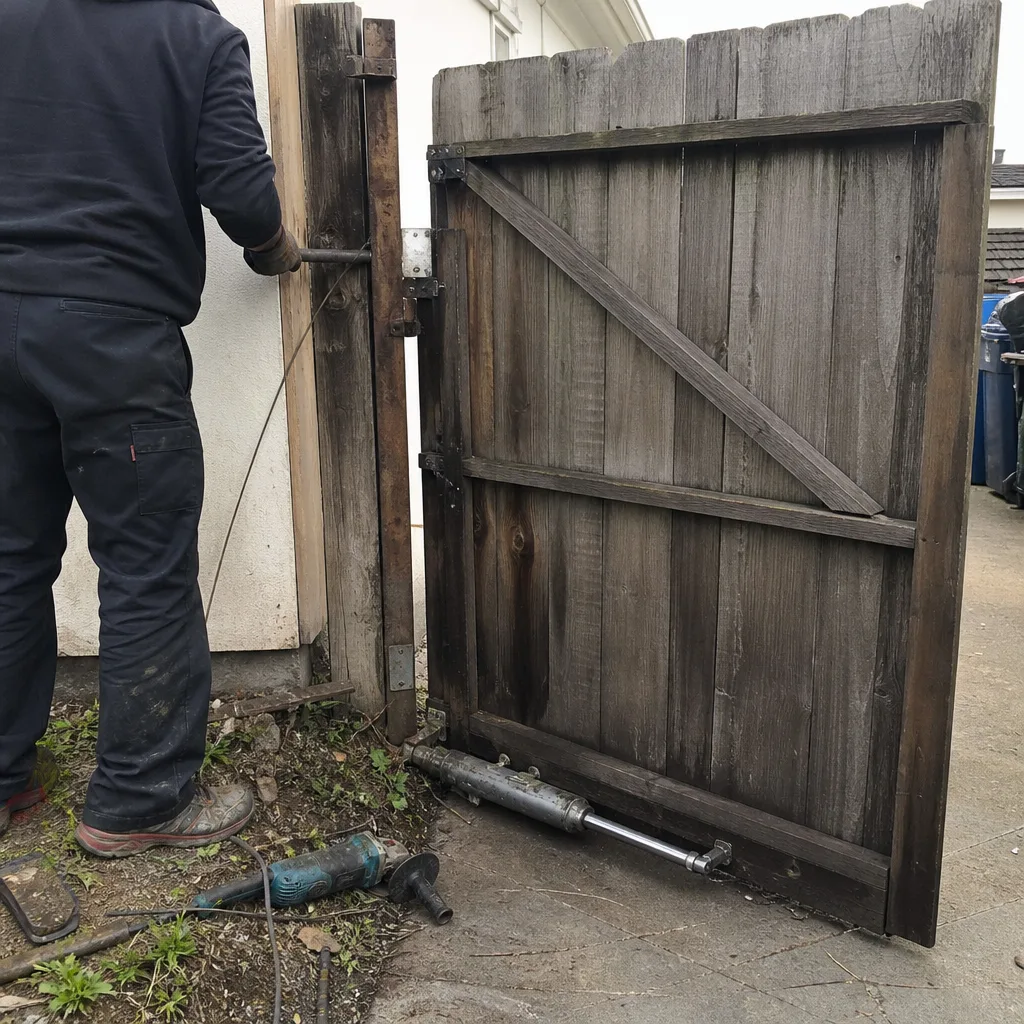 Before
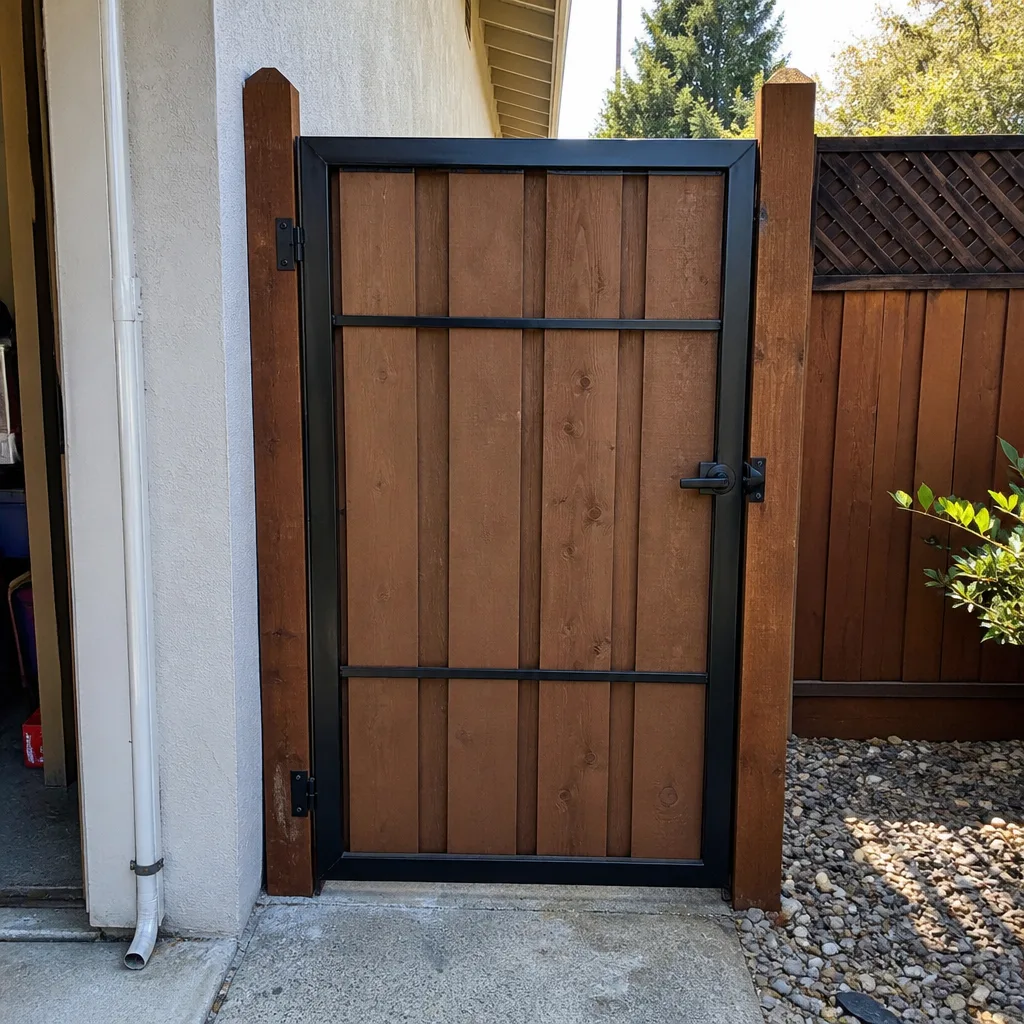 After
After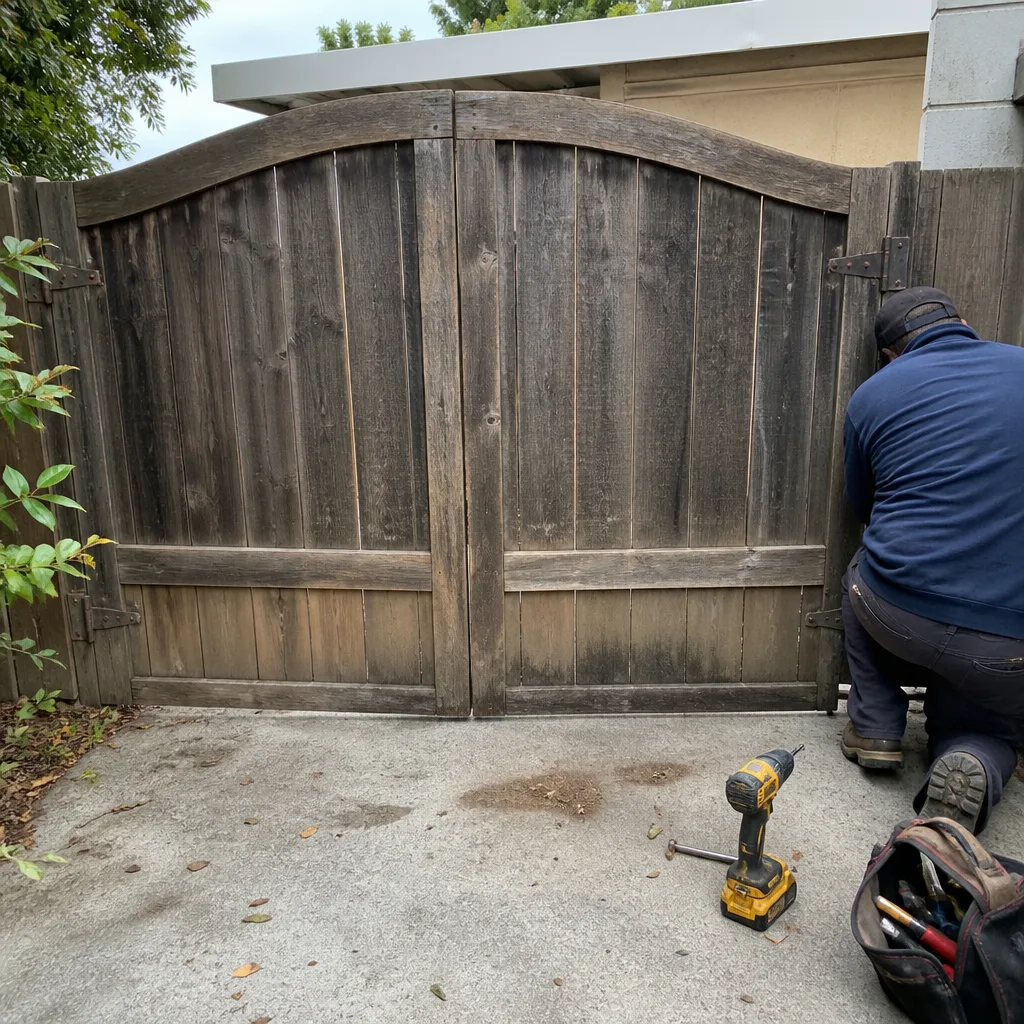 Before
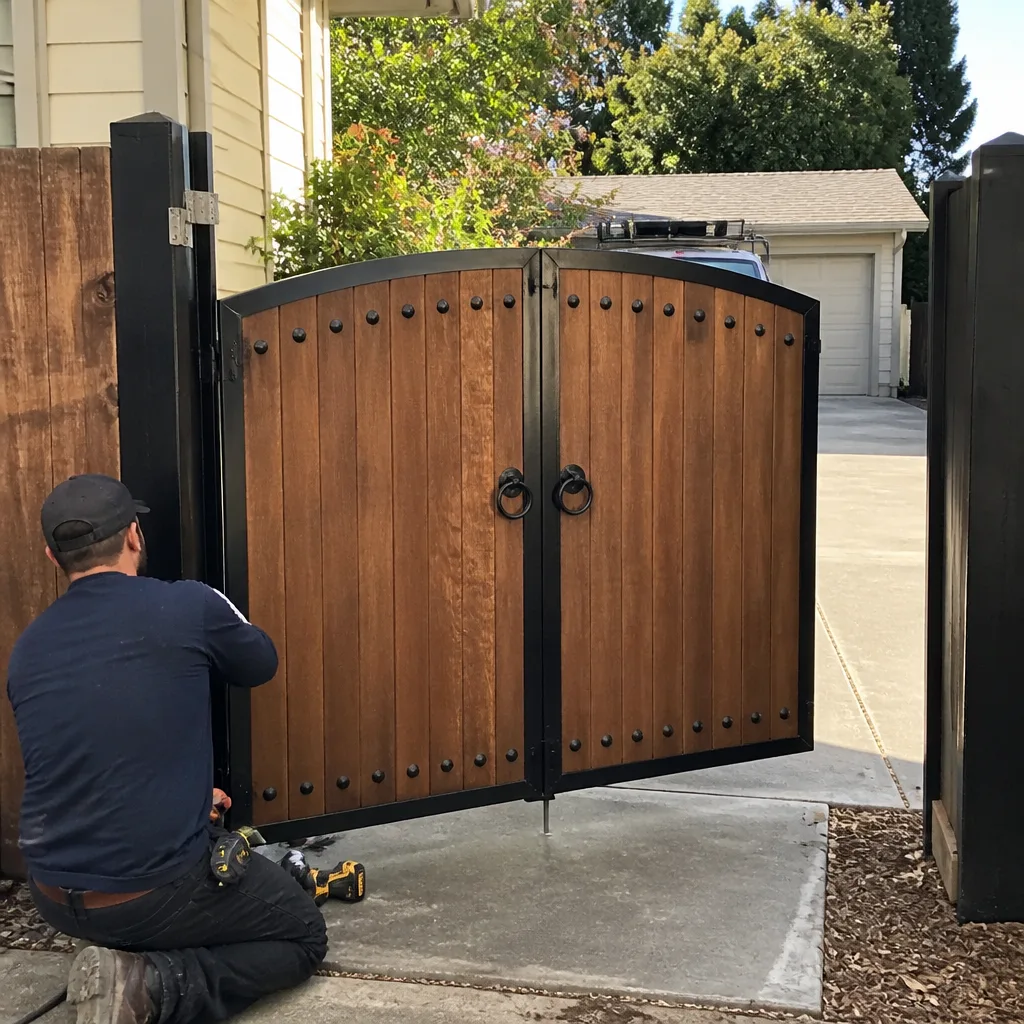 After
After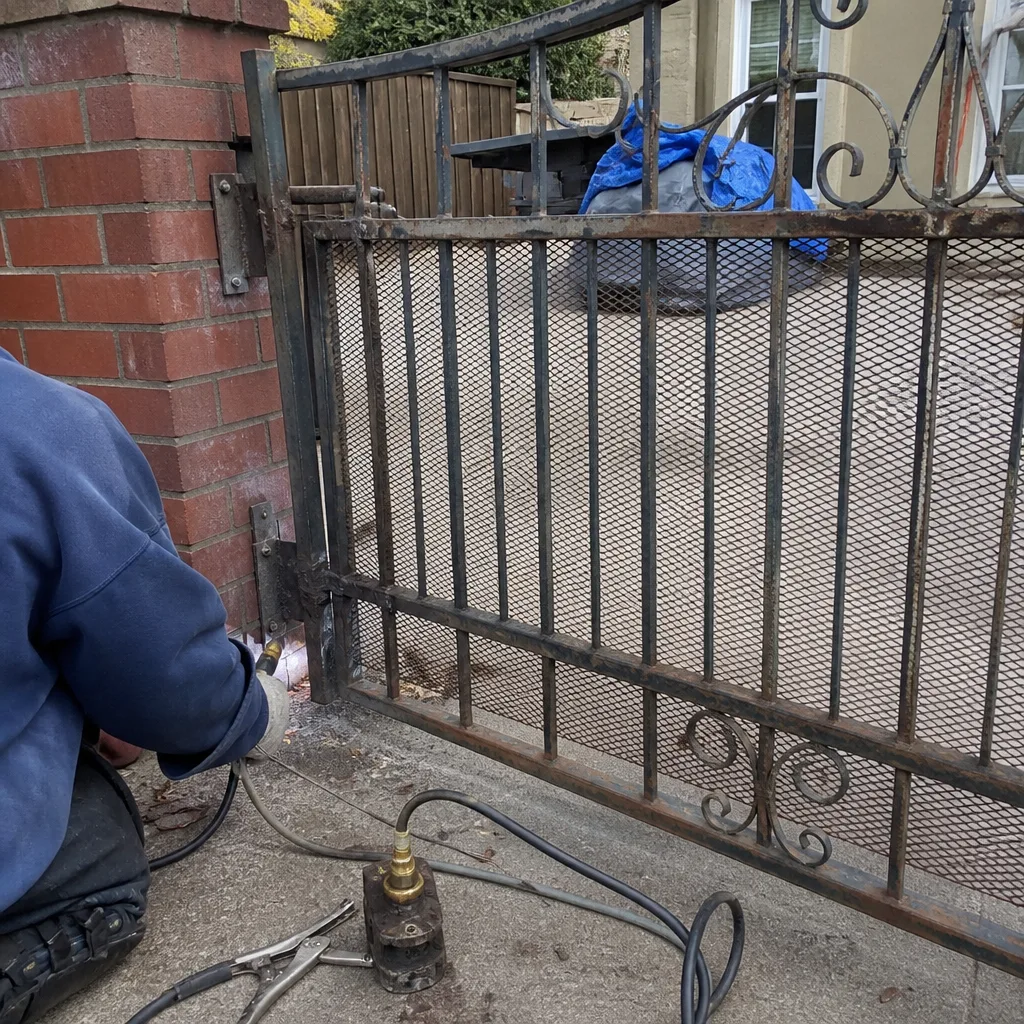 Before
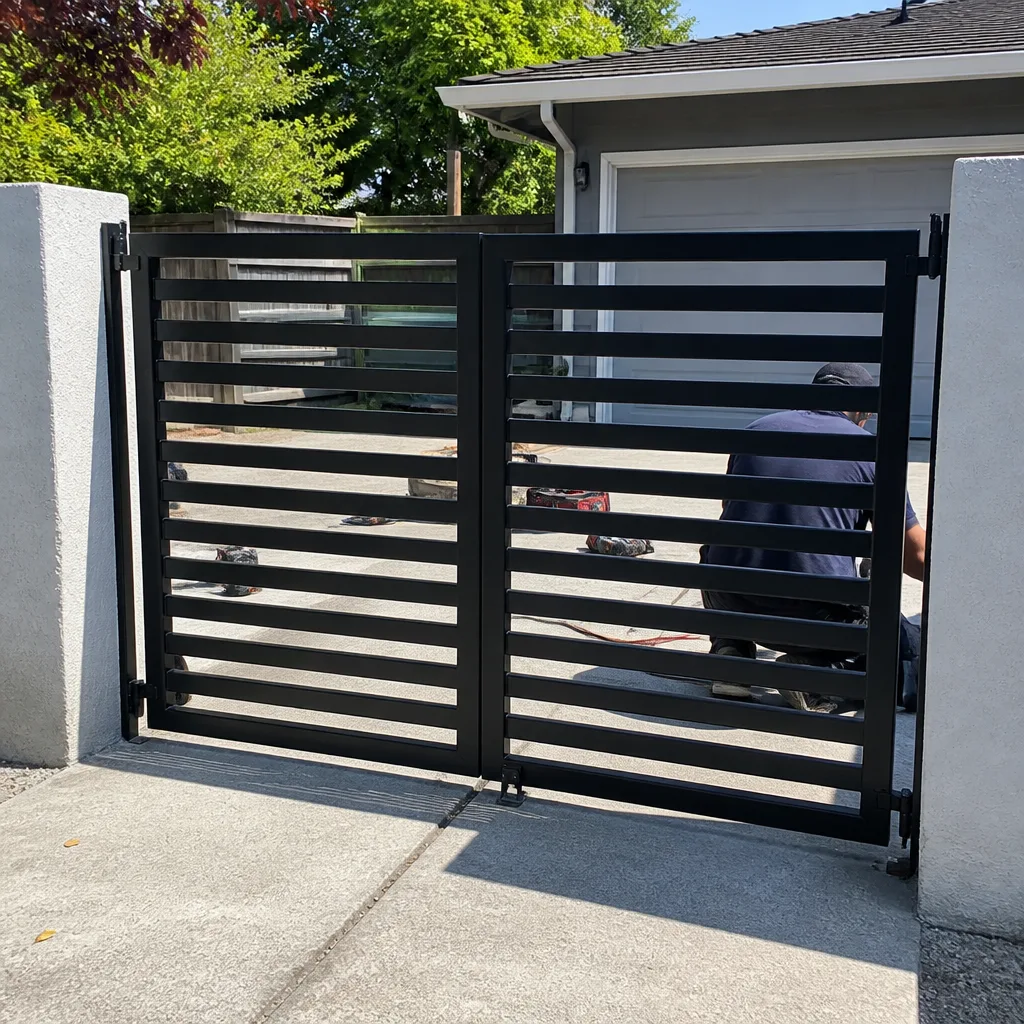 After
AfterWhen to Call a Professional
Call a gate technician when the problem involves the opener’s electrical system, any high-tension spring, a shifting post, a cracked weld, or a gate that’s become too heavy or awkward to move manually. Call before the damage compounds: a gate that’s misbehaving for a week will be more expensive to fix than one that misbehaved for a day. Calder Gate Repair San Jose offers free estimates at (669) 666-6859, and a live person answers every call, 24 hours a day, 7 days a week. No phone trees, no voicemail, no chat bots. You’ll get a written price before any work starts, and your tech arrives with a live, trackable arrival time, background-checked and in uniform.
Frequently Asked Questions
Most gate repairs in San Jose run between $120 and $450 before parts, with simple fixes like sensor cleaning at the low end and control board replacements at the high end. Structural repairs like post resets can exceed $1,000 in foothill zones with expansive clay soil. Call (669) 666-6859 for a free estimate on your specific gate.
In many cases, yes. Common repairs like limit switches, capacitors, sensor realignment, and hinge replacements on standard Viking, Ghost Controls, DoorKing, and Elite openers can be completed same-day when parts are on the truck. Call (669) 666-6859 and describe your symptoms, and we’ll tell you honestly whether same-day service is realistic before you commit to anything.
No brand is bulletproof, but the failure patterns are predictable. Ghost Controls boards are vulnerable to power surges, Viking limit switches wear faster than any other brand we service, Elite capacitors fail in Evergreen’s heat, and DoorKing belts stretch over time. The most reliable opener is one that’s correctly matched to your gate’s weight, properly surge-protected, and installed in a sealed enclosure. Brand matters less than installation quality and climate-appropriate protection.
Yes. Calder Gate Repair San Jose services swing gates, slide gates, cantilever gates, and barrier arm gates across residential and light commercial properties throughout San Jose, from Willow Glen to Evergreen to Almaden Valley. Our technicians are trained on the full range of mechanical, electrical, and structural systems for each gate type.
The 365-Day Done Right Promise means if your repair fails within 365 days, Calder Gate Repair returns at no charge to make it right. Every job includes a written guarantee, and a free second visit if the repair fails. The promise is stated in writing on every job; it’s never optional, and it’s never hidden in fine print.
Always. Every Calder Gate Repair job includes a written price before any work starts, no exceptions. The number on the invoice is the number agreed to at the door, never a surprise. Estimates are free, and you can schedule one by calling (669) 666-6859.
The Bottom Line
San Jose gate repair comes down to diagnosis. The three failure systems, mechanical, electrical, and structural, interact in ways that make symptoms misleading, and the single biggest mistake homeowners make is treating the symptom instead of the cause. Know your brand’s known failure points, protect against your neighborhood’s microclimate, and never accept an estimate that doesn’t include a written diagnosis and a written total. The right repair holds for years. The wrong one holds for months. Calder Gate Repair San Jose has been serving San Jose since 2009, with the Relay Visibility Guarantee standard on every job: live arrival times, before-and-after photos, a digital invoice you pay from a link, and a 365-Day Done Right Promise in writing. For more guides & resources, visit our blog. Call (669) 666-6859 and tell us what your gate is doing. We’ll tell you why, and what it costs to fix it right.
Written by Nico Alvarez, Owner at Calder Gate Repair San Jose, serving San Jose since 2009.